
Metastannic Acid
 Chemical Identity
Chemical Name: Metastannic Acid (also known as Stannic Acid or Tin(IV) Acid)
Chemical Formula: H₂SnO₃ or SnO₂·xH₂O (hydrated form)
Molecular Weight:
- Anhydrous form (H₂SnO₃): approximately 168.73 g/mol
- The molecular weight varies for hydrated forms depending on water content
Product Overview
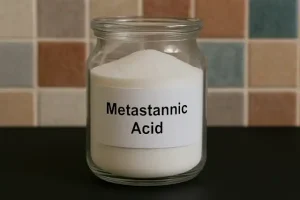
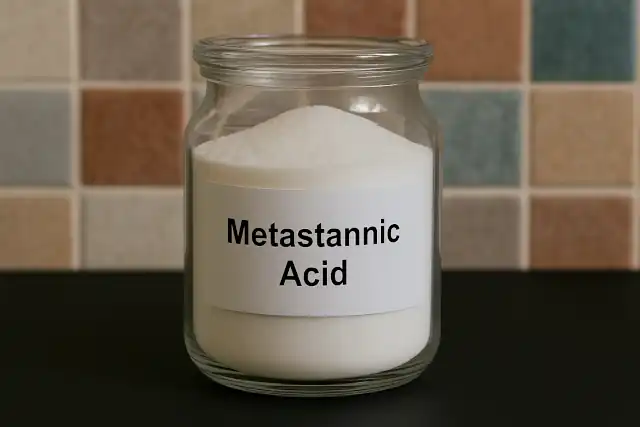
Metastannic acid is an inorganic compound of tin in its +4 oxidation state. It typically exists as a white or off-white amorphous powder and is generally produced as a hydrated form of tin dioxide. The compound is essentially insoluble in water but can dissolve in strong acids and alkalis.
Key Characteristics
- Appearance: White to off-white powder or gel-like substance
- Solubility: Insoluble in water; soluble in concentrated acids and bases
- Stability: Relatively stable under normal conditions
- Form: Often exists as a hydrated colloidal gel
Applications
Metastannic acid finds use in various industrial applications including catalysis, as a precursor for tin dioxide materials, in ceramic formulations, and in certain chemical synthesis processes. Its amphoteric nature makes it valuable in specialized chemical applications.
Safety & Handling
As with all chemical products, metastannic acid should be handled with appropriate personal protective equipment and stored in a cool, dry place away from incompatible materials.